
Internal Tree Decay Evaluation and Structural Assessment
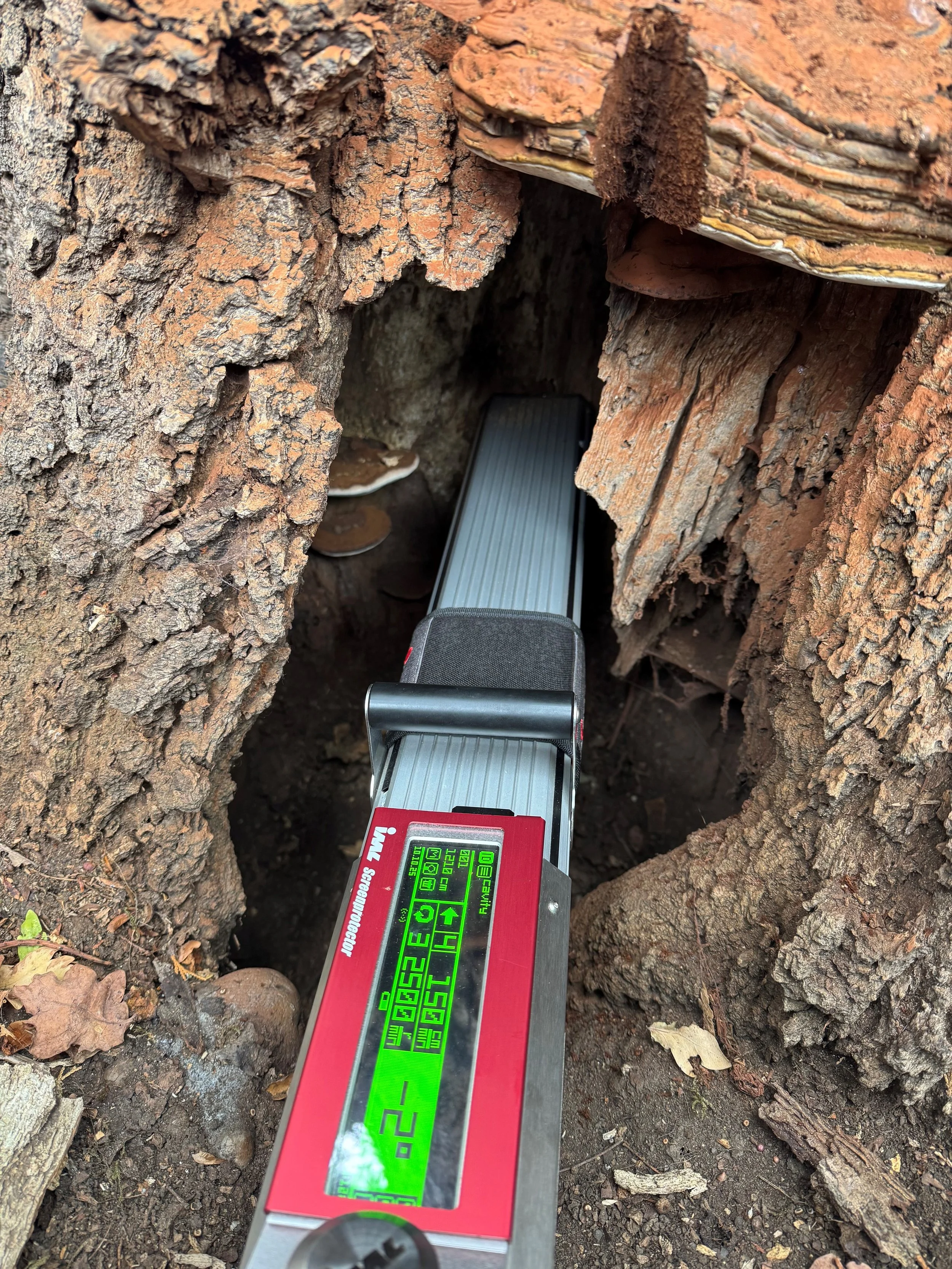
Down To Earth Trees Ltd provides specialist internal tree decay evaluation and structural assessment using advanced diagnostic technology. Where visual inspection identifies potential defects such as fungal fruiting bodies, cavities, cracks, or other indicators of internal dysfunction, further investigation is often required to accurately determine the extent of decay and the tree’s residual structural strength.
Using industry-leading tools including PiCUS Sonic Tomography, TreeTronic Electrical Resistance Tomography (ERT), and PD400 Resistograph testing, we are able to assess the internal condition of trees with a high degree of accuracy. These non-destructive techniques provide reliable, evidence-based data to support informed tree management decisions.
This approach enables many trees to be safely retained where sufficient structural integrity remains, while clearly identifying cases where remedial works are necessary to reduce risk and ensure public safety.
Sonic Tomography – Internal Tree Decay Detection
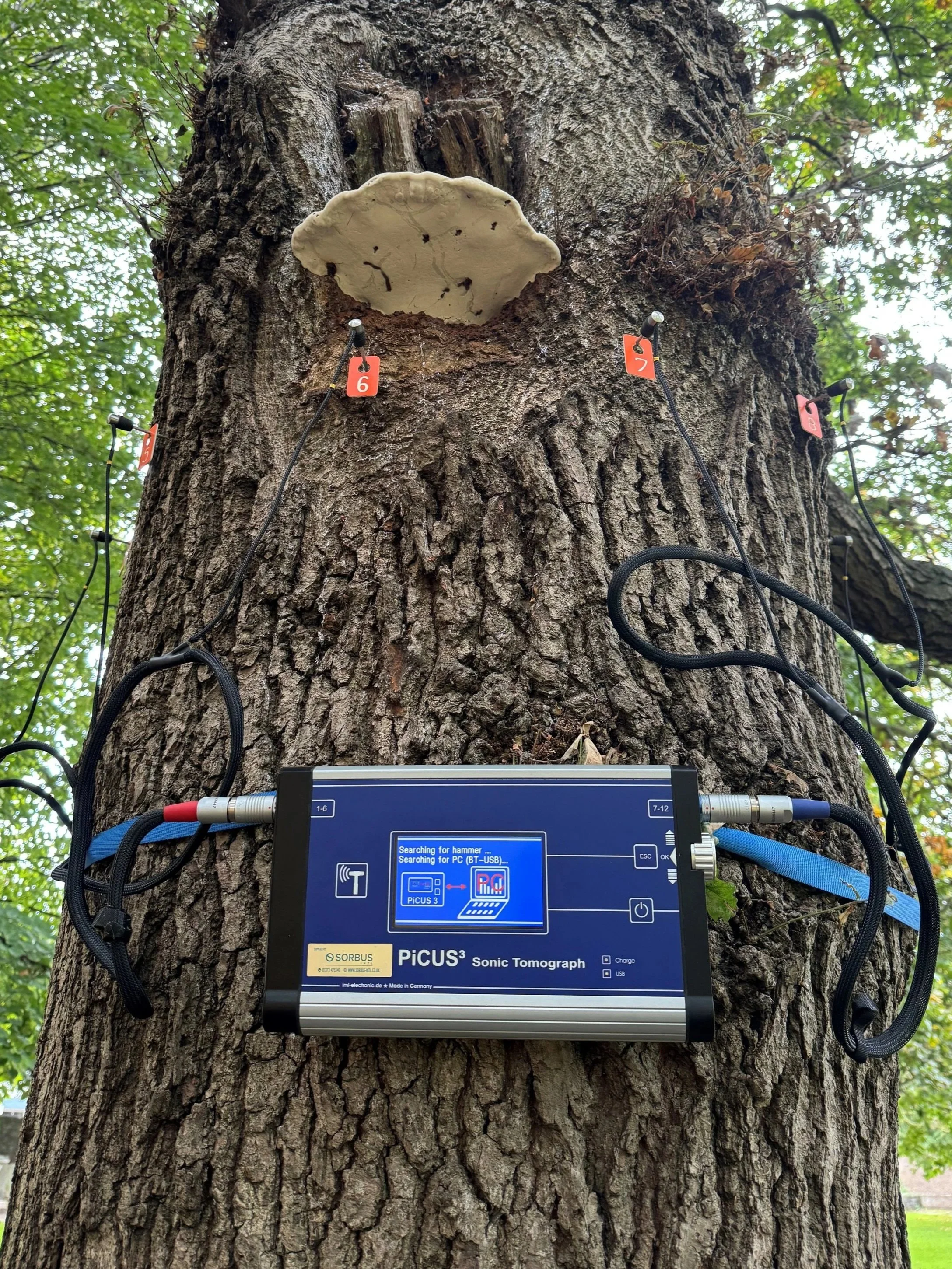
PiCUS Sonic Tomography is a non-invasive diagnostic method used to detect internal decay, cavities, and structural weakness within trees.
The system measures sound wave transmission through the stem to produce a detailed tomographic image, allowing us to:
Identify hidden decay and hollowing
Assess remaining structural strength
Determine whether trees can be safely retained
Support defensible tree risk management decisions
This technology is widely recognised as the industry standard for internal tree condition assessment.
Electrical Resistance Tomography (ERT) – Advanced Structural Analysis
TreeTronic Electrical Resistance Tomography (ERT) provides a detailed image of internal wood condition based on electrical conductivity. This allows accurate identification of:
Early-stage decay
Structural dysfunction
Cracks and internal defects
Moisture-related decay progression
When combined with sonic tomography, this provides one of the most accurate tree decay assessment methods available.
Resistograph Testing – Precision Wood Density Measurement
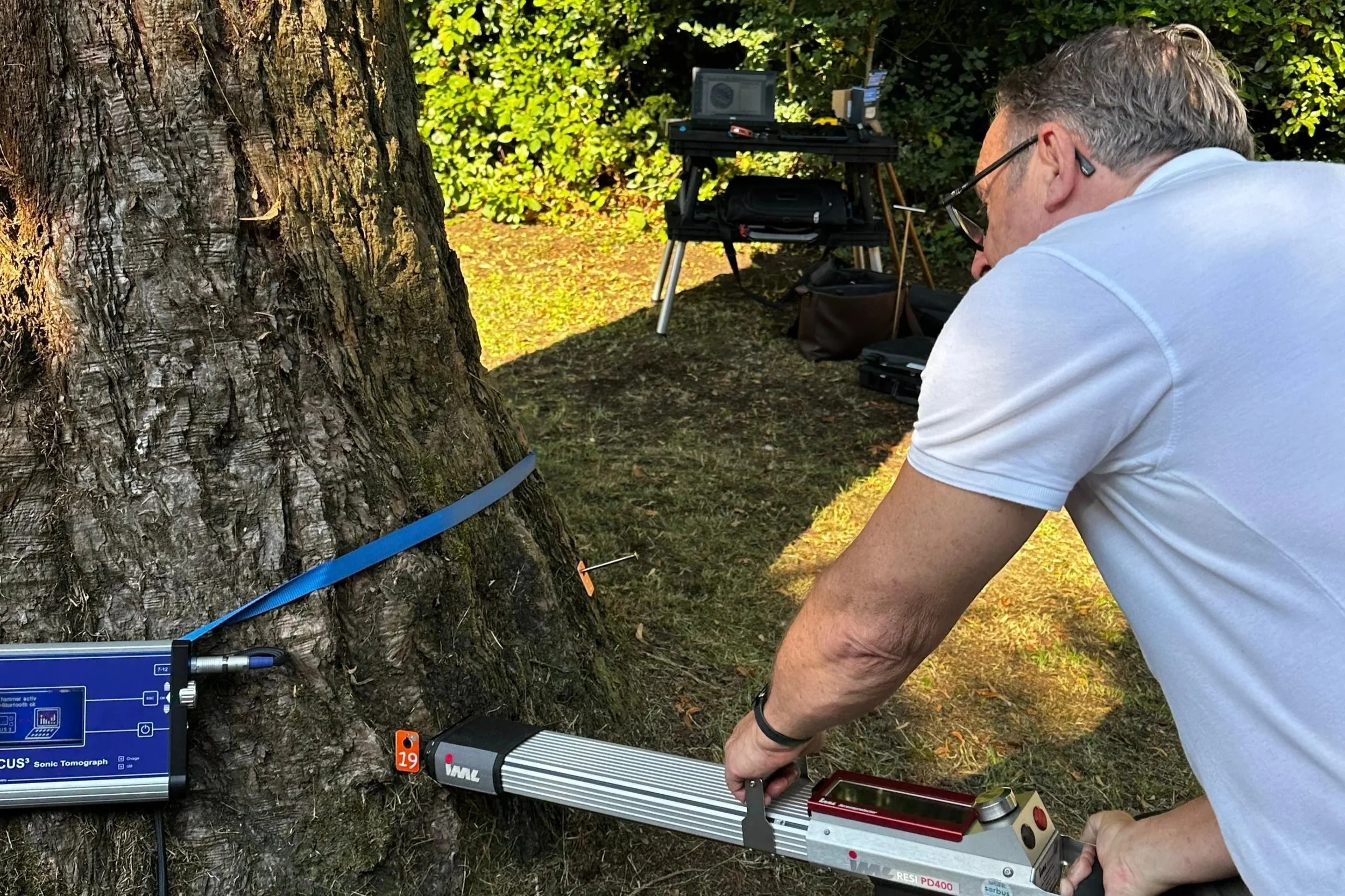
The PD400 Resistograph uses a fine micro-drill to measure wood density and confirm the thickness of remaining sound wood.
This precise testing method is used to:
Confirm tomographic findings
Assess structural stability
Support tree retention where safe
Provide defensible evidence for management decisions
This approach allows many trees to be safely retained, reducing unnecessary felling while ensuring public safety.
Detailed Tree Risk Assessment Reports
Following inspection and testing, Down To Earth Trees Ltd provides a comprehensive tree risk assessment report including:
Structural condition analysis
Interpretation of tomography and Resistograph results
Risk of failure assessment
Tree risk evaluation using TreeCalc and QTRA methodology
Clear management recommendations
These reports provide defensible, professional evidence to support tree management decisions.
Experienced Arboricultural Consultants
Down To Earth Trees Ltd consultants hold recognised professional qualifications, including:
LANTRA Professional Tree Inspector certification
Advanced tree decay detection training
Extensive Local Authority inspection experience
We have undertaken tree risk assessments and decay detection surveys for:
Local Authorities
Schools and universities
Public parks and estates
Commercial property managers
Private landowners
Our work supports safe tree retention while ensuring legal compliance and public safety.

Areas we cover
We cover most of the South East including Kent, Surrey, Sussex, London and Essex.


Interpretation of Electrical Resistance Tomography and Resistograph Test Results
Electrical Resistance Tomography (ERT) provides a detailed image of the internal electrical conductivity of the tree stem at the measured cross-section. This allows accurate identification of areas affected by decay, cavities, or altered wood structure. Sound wood typically shows higher electrical resistance, while decayed or dysfunctional areas exhibit increased conductivity due to higher moisture content and cellular breakdown. In addition to identifying decay, ERT can detect early-stage structural changes not yet visible externally.
When used alongside PiCUS Sonic Tomography, the combined data provides a highly accurate assessment of internal condition. Sonic tomography identifies variations in sound wave transmission through the wood, while ERT helps distinguish the nature of the defect and clarify results where cracks or structural irregularities may affect sonic readings. This combined approach enables a more precise understanding of both the extent and type of internal dysfunction, as well as providing an indication of the likely progression of decay.
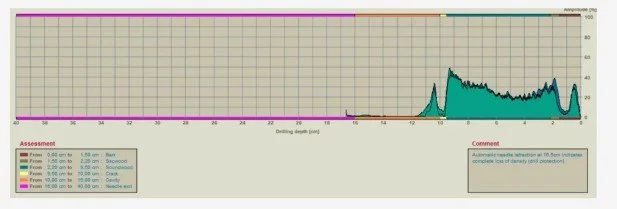
To further validate and quantify these findings, Resistograph micro-drill testing may be undertaken. This involves a very fine drill needle passing through the stem while recording resistance to penetration. The resulting graph shows variations in wood density, allowing precise measurement of remaining sound wood thickness and confirming areas of decay or structural weakness identified by tomographic testing.
In the example illustrated, the combined tomography and Resistograph testing identified a degree of structural weakness within the main stem at approximately 2 metres above ground level.
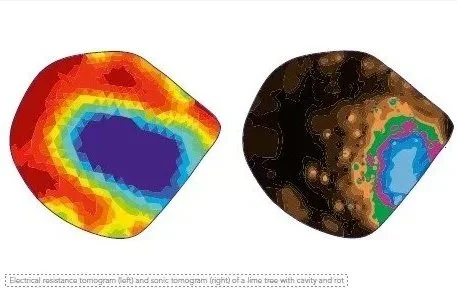
Resistograph data confirmed a reduced thickness of sound wood beyond approximately 10cm depth, indicating insufficient residual strength to provide an acceptable level of safety in a high-occupancy environment. Based on these findings, appropriate remedial tree works were recommended (crown reduction to alleviate weight loading and reduce the effects of wind sail) allowed the tree to be retained, yet mitigate the element of risk to acceptable levels.
In many cases, however, this level of detailed diagnostic assessment demonstrates that trees with internal decay retain sufficient structural integrity to be safely retained. This evidence-based approach allows important and valuable trees, including veteran specimens, to be preserved wherever possible while ensuring safety and fulfilling the tree owner’s duty of care.